


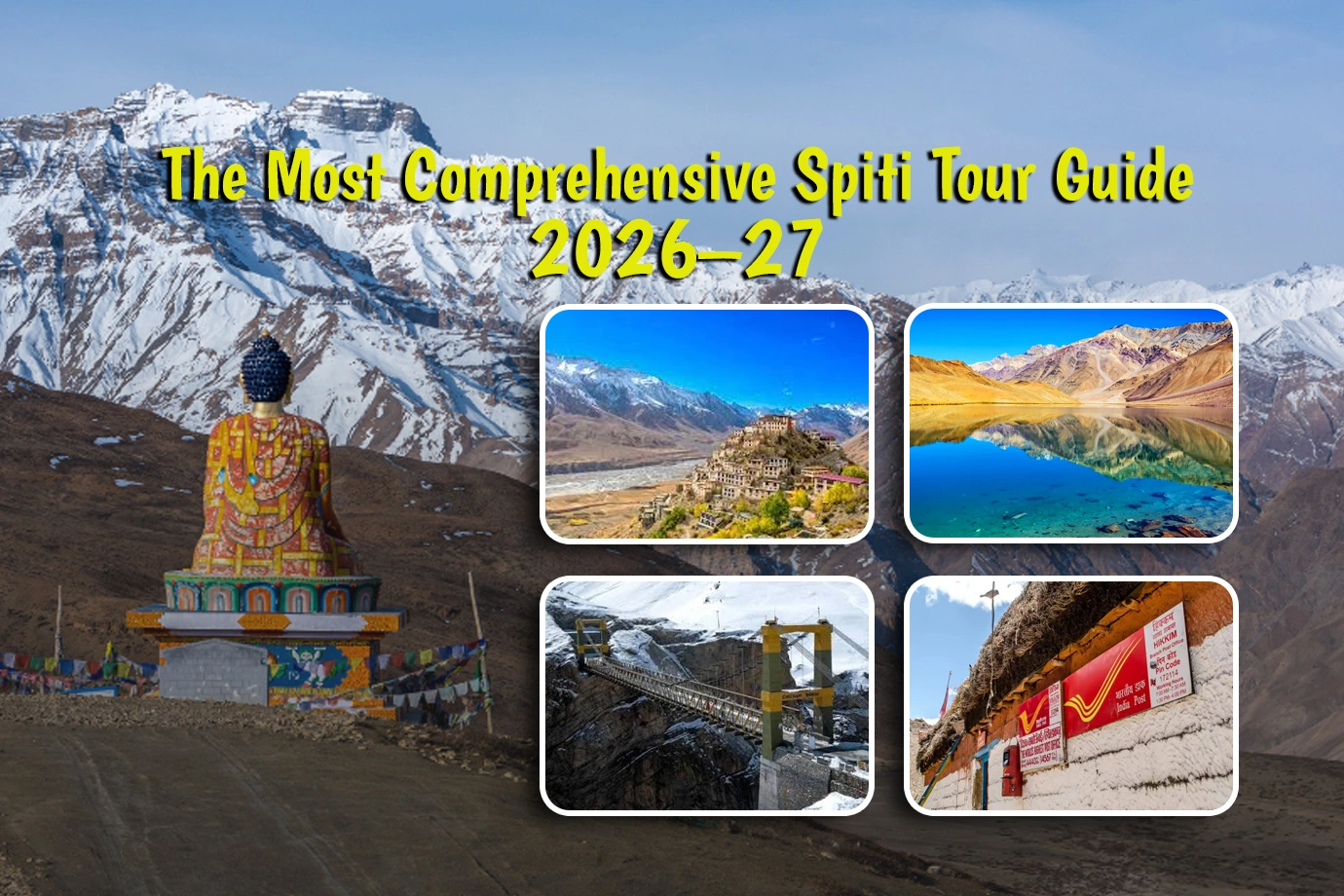
The Most Comprehensive Guide to Spiti Tour in 2026 & Winter 2026 – 2027
Introduction: Why Spiti Valley Is India’s Ultimate Himalayan Expedition
Few destinations in the world combine such dramatic landscapes, ancient Buddhist culture, remote frontier roads, high-altitude deserts, pristine monasteries, glacial rivers, and untouched villages as Spiti Valley.
Located in the rain shadow of the Greater Himalayas in Himachal Pradesh, Spiti is often described as “Little Tibet of India.” Yet that description barely scratches the surface.
Spiti is:
- A high-altitude desert averaging 12,500–15,500 ft
- Home to some of the world’s highest villages
- A living Buddhist cultural landscape
- India’s ultimate road-trip destination
- One of Asia’s most spectacular winter expeditions
- A frontier region bordering Tibet
Whether you’re seeking a Luxury Spiti Tour Package, a Private Spiti Valley Tour, a Spiti Valley Group Tour Package, or a hardcore Spiti Shipki La Expedition, this guide covers everything.
Why Spiti Is Different From Every Other Himalayan Destination
Unlike Manali, Kashmir, or Uttarakhand, Spiti isn’t about crowded viewpoints or commercial tourism.
Spiti is about:
- Ancient monasteries older than many European nations
- Villages frozen in time
- High mountain passes
- Stark lunar landscapes
- Himalayan wildlife
- Frontier roads touching Tibet
- Authentic cultural immersion
The result is one of the most rewarding journeys in the Himalayas.
Spiti Valley Quick Facts
| Feature | Details |
| State | Himachal Pradesh |
| Elevation | 10,500–15,500 ft |
| Highest Motorable Route | Kunzum Pass |
| Best Season | May–October |
| Winter Season | December–March |
| Closest Airport | Chandigarh |
| Main Hub | Kaza |
| Border Region | Tibet |
| Road Types | Mountain highways, off-road tracks, frontier roads |
Understanding Different Types of Spiti Tours
1. Luxury Spiti Tour Package
Ideal for:
- Couples
- Families
- International travelers
- Photographers
- Premium experiential travelers
Includes:
- Premium hotels
- Boutique stays
- Luxury camps
- Experienced drivers
- Flexible itineraries
- Customized experiences
Benefits
- Better acclimatization
- Personalized experiences
- Enhanced comfort
- Superior safety
2. Spiti Valley Group Tour Package
Ideal for:
- Solo travelers
- Backpackers
- Young professionals
Advantages:
- Affordable
- Social environment
- Fixed departures
- Shared transport
3. Private Spiti Valley Tour
Ideal for:
- Families
- Honeymooners
- Senior travelers
- Photographers
Advantages:
- Personalized pace
- Flexible sightseeing
- Exclusive vehicle
- Greater comfort
4. Private Spiti 4×4 Expedition
Ideal for:
- Adventure enthusiasts
- Explorers
- Expedition travelers
Features:
- Force Gurkha
- Thar
- Premium 4×4 vehicles
- Frontier routes
- Remote exploration
Luxury vs Group vs Private Spiti Tour Comparison
| Feature | Group Tour | Private Tour | Luxury Tour |
| Cost | Lowest | Medium | Premium |
| Flexibility | Fixed | High | Maximum |
| Comfort | Standard | Good | Excellent |
| Photography Stops | Limited | Flexible | Unlimited |
| Accommodation | Shared Hotels | Private Rooms | Boutique Premium |
| Vehicle | Shared | Exclusive | Premium SUV/4×4 |
| Suitable for Families | Moderate | Excellent | Excellent |
| Senior Citizens | Limited | Good | Best |
The Ultimate Trans Himalayan Spiti Tour
The Trans Himalayan Spiti Tour is considered one of India’s greatest road journeys.
It traverses:
- Shimla
- Narkanda
- Sangla
- Kalpa
- Pooh
- Nako
- Tabo
- Dhankar
- Kaza
- Langza
- Hikkim
- Komic
- Kibber
- Chandratal
- Manali
Highlights include:
- Ancient monasteries
- High-altitude villages
- Fossil landscapes
- Glacial lakes
- Himalayan wildlife
- Frontier regions
Spiti Shipki La Expedition: India’s Ultimate Frontier Journey
What Makes Shipki La Special?
Shipki La is one of India’s least-explored frontier regions.
Situated near the Indo-Tibet border, this route offers access to:
- Khab
- Pooh
- Namgia
- Shipki Village
- Lepcha Region
Unlike conventional Spiti tours, the Spiti Shipki La Expedition ventures deep into strategic frontier landscapes rarely visited by mainstream tourists.
Expedition Highlights
- Sutlej River Canyon
- Khab Confluence
- Ancient trade routes
- Border villages
- High-altitude frontier roads
- Tibetan cultural influences
Why Shipki La Is The Future Of Premium Spiti Tourism
Travelers increasingly seek:
- Less crowded destinations
- Authentic experiences
- Expedition travel
- Cultural immersion
Shipki La offers all of these.
Complete 10 Nights / 11 Days Spiti Valley Itinerary
Day 1: Chandigarh to Narkanda
Highlights:
- Himalayan foothills
- Apple orchards
- Scenic mountain drives
Day 2: Narkanda to Sangla
Highlights:
- Kinnaur Valley
- Baspa River
- Traditional villages
Day 3: Sangla to Kalpa
Highlights:
- Kinner Kailash views
- Monasteries
- Local culture
Day 4: Kalpa to Nako
Highlights:
- High-altitude desert begins
- Nako Lake
- Ancient monasteries
Day 5: Nako to Tabo
Highlights:
- Gue Monastery
- Mummy village
- Tabo Monastery
Day 6: Tabo – Dhankar – Kaza
Highlights:
- Dhankar Monastery
- Confluence viewpoints
- Kaza town
Day 7: Langza – Hikkim – Komic
Highlights:
- Fossil hunting
- World’s highest post office
- Highest village road network
Day 8: Kibber – Chicham
Highlights:
- Chicham Bridge
- Wildlife habitat
- Snow leopard territory
Day 9: Kaza to Chandratal
Highlights:
- Kunzum Pass
- Chandratal Lake
- Luxury camping
Day 10: Chandratal to Manali
Highlights:
- Batal
- Atal Tunnel
- Lahaul Valley
Day 11: Manali to Chandigarh
Tour concludes.
Winter Spiti Tour 2026–2027
Winter transforms Spiti into another world.
Temperatures can drop below:
- -25°C in villages
- -35°C in exposed locations
Yet winter offers:
- Frozen rivers
- Snow-covered monasteries
- Spectacular photography
- Authentic village life
- Snow leopard opportunities
Why Winter Spiti Is Becoming Popular
Travelers increasingly prefer:
- Fewer tourists
- Authentic experiences
- Snow landscapes
- Unique adventures
This has made the Spiti Winter Tour one of India’s fastest-growing adventure travel segments.
Winter Spiti Survival Guide
Clothing Strategy
Layer 1: Merino thermal base
Layer 2: Fleece insulation
Layer 3: Down jacket
Layer 4: Windproof shell
Essential Gear
- Snow boots
- Hand warmers
- Balaclava
- Sunglasses
- Moisturizer
- Lip balm
Health & Acclimatization
Never ignore:
- Headache
- Nausea
- Breathlessness
Hydration remains critical.
Vehicle Selection
Winter Spiti requires:
- 4×4 vehicles
- Experienced mountain drivers
- Snow chains
- Emergency supplies
Best Villages To Visit In Spiti
Langza
Known for:
- Fossils
- Buddha statue
- Himalayan views
Hikkim
Famous for:
- World’s highest post office
Komic – One of the highest villages in the world.
Kibber – Wildlife and dramatic landscapes.
Dhankar – Ancient monastery perched on cliffs.
Most Important Monasteries
Tabo Monastery – Over 1,000 years old.
Key Monastery – Most iconic monastery in Spiti.
Dhankar Monastery – Historic cliffside structure.
Kungri Monastery – Ancient spiritual center.
Best Time To Visit Spiti
| Season | Months | Recommendation |
| Summer | May–June | Excellent |
| Monsoon | July–August | Good |
| Autumn | September–October | Best |
| Winter | November–March | Expedition Travel |
Luxury Accommodation In Spiti
Luxury Spiti Valley Tours increasingly focus on:
- Boutique mountain lodges
- Premium camps
- Heritage stays
- Curated local experiences
The future of Spiti tourism lies in immersive luxury rather than conventional hotels.
Sustainable Travel In Spiti
Responsible travelers should:
- Avoid plastic
- Respect monasteries
- Support local businesses
- Minimize waste
Spiti remains ecologically fragile.
Why Choose GHAS For Spiti Expeditions
Great Himalayan Adventure Studio (GHAS) specializes in:
- Luxury Spiti Tour Packages
- Private Spiti Valley Tours
- Spiti Valley Group Tour Packages
- Shipki La Expeditions
- Winter Spiti Tours
- 4×4 Himalayan Expeditions
Strengths include:
- Multi-award-winning operator
- Owned fleet
- Force Gurkha expeditions
- Boutique stays
- Experienced mountain team
- High-altitude expertise
Frequently Asked Questions
1. Which is the best Spiti tour package in 2026?
The best Spiti tour package depends entirely on your travel style, comfort expectations, and available time. For first-time visitors, a 10–11 day circuit through Kinnaur, Spiti, Chandratal, and Manali offers the most comprehensive experience. Travelers seeking comfort should choose a Luxury Spiti Tour Package with boutique accommodations and private transportation. Adventure enthusiasts often prefer a Spiti 4×4 Expedition, while solo travelers usually find a Spiti Valley Group Tour Package more economical and socially engaging. The ideal package balances acclimatization, sightseeing, comfort, and safety while covering major highlights such as Tabo, Dhankar, Key Monastery, Langza, Hikkim, Komic, Kibber, and Chandratal.
2. Is Spiti safe for families and senior citizens?
Yes, Spiti can be safely explored by families and senior citizens when planned correctly. Proper acclimatization, comfortable vehicles, experienced drivers, and gradual altitude gain are crucial. Private tours are generally recommended for families and elderly travelers because they allow flexible pacing and rest stops.
3. What is the best time to visit Spiti Valley?
The best time depends on the experience you seek. Summer and autumn provide accessible roads and pleasant weather, while winter offers snow-covered landscapes and expedition-style adventures.
4. How cold does Spiti get in winter?
Winter temperatures commonly range between -10°C and -25°C, while remote areas can experience even lower temperatures. Proper winter clothing is essential.
5. Is Chandratal accessible in winter?
No. Chandratal generally remains inaccessible during winter because heavy snowfall blocks access routes.
6. What makes Shipki La special?
Shipki La provides access to frontier Himalayan landscapes, remote border villages, and ancient trade routes rarely seen by regular tourists.
7. Is altitude sickness common in Spiti?
Altitude sickness can affect anyone. Proper acclimatization, hydration, and gradual ascent significantly reduce risks.
8. Which route is better: Shimla or Manali?
Shimla is better for acclimatization, while Manali offers faster access. Many travelers combine both routes.
9. How many days are required for Spiti?
A minimum of 8–10 days is recommended, while 10–12 days offers a more immersive experience.
10. Is a 4×4 necessary?
Not always, but 4×4 vehicles greatly improve comfort and safety on rough terrain and winter routes.


